
In this conversation between Paz Núñez-Regueiro, General Heritage Curator, musée du quai Branly-Jacques Chirac and Colleen Ritzau Leth, Vice President of CORA Foundation, we go behind the scenes on the story behind an unexpected exhibition at the Palace of Versailles.
April 29, 2026
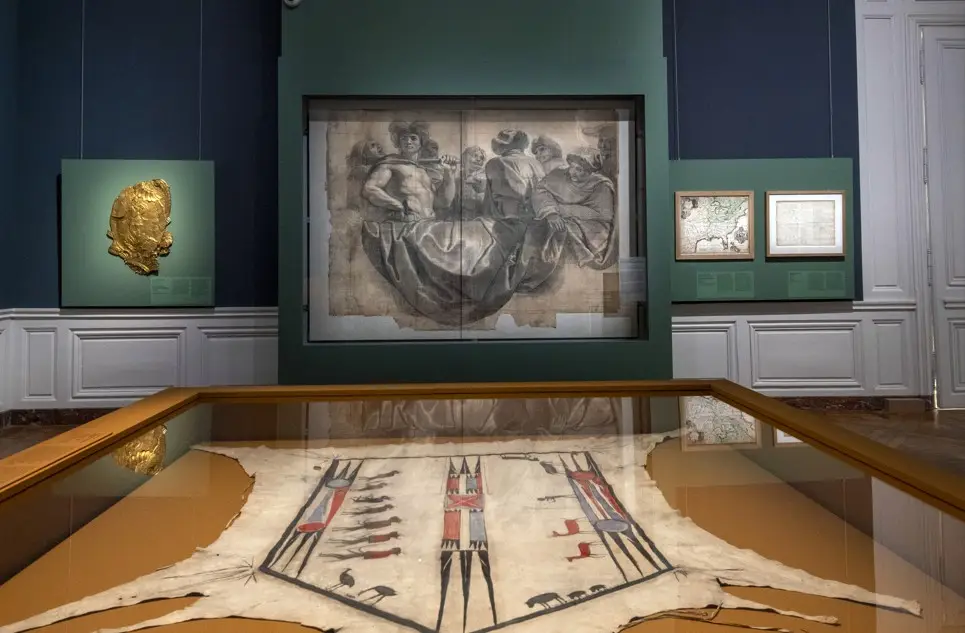
When visitors step into Versailles, they often expect grand royal interiors and stories of the French monarchy. What they don’t expect is an exhibition exploring Native American diplomacy.
For the last several months, that very surprise has delighted and engaged audiences from around the world.
It has become one of the greatest successes of 1725: Native American Allies at the Court of Louis XV, a landmark exhibition co-curated by Bertrand Rondot, General Heritage Curator, Château de Versailles, Paz Núñez-Regueiro, General Heritage Curator, musée du quai Branly-Jacques Chirac, and Jonas Musco, Historian, Research Associate, in collaboration with the research project CRoyAN – Royal Collections of North America. The exhibition is supported by CORA Foundation.
This exhibition is the result of collaborative work with six Native American Nations which were major French allies in the Mississippi Valley in the 18th century: the Choctaw Nation of Oklahoma, the Quapaw Nation, the Miami Tribe of Oklahoma, the Peoria Tribe of Indians of Oklahoma (Illinois), the Otoe-Missouria Tribe of Oklahoma and the Osage Nation.
In the first of a new series, CORA Vice President Colleen Ritzau Leth and Paz Núñez-Regueiro examine the foundations of the exhibition project and how it has evolved. In an open and insightful conversation, they celebrate project’s ambitions and reflect on its outcomes, pointing the way for future initiatives supported by CORA.
Paz began the conversation by explaining how the exhibition has been met with overwhelming positivity with the most common reaction from visitors being their surprise at what they see.
“Obviously, the subject of the exhibition is somewhat unusual for visitors to Versailles: they are accustomed to learning about the power, artistry, and political symbolism of the French monarchy, but have rarely encountered France’s diplomatic relations with Native Nations in North America,” Paz said.
“One of the most rewarding aspects is seeing visitors discover the exhibition by chance and become completely captivated by the subject.”
Colleen agreed: “It’s been validating and wonderful to witness how expansive curatorial practice can be at Versailles, a recurring partner for CORA over the last few years – first with contemporary art and the Guillaume Bresson project, and now this. Many curators have traditionally worked within very specific areas of expertise, so seeing the specialist teams think more broadly, across different histories and wider historical contexts, has been a really exciting shift and something we are proud to support.”
American visitors have been particularly moved by visiting the galleries.
Paz explained, “We’ve had visitors say things like, ‘I’m from Ohio, and I had no idea this history existed. As a curator, it’s particularly meaningful to witness this moment of discovery, when people realize they are personally connected to a story they are encountering for the first time.”
French audiences are also encountering unfamiliar narratives, an extraordinary range of objects rarely if ever shown on display, and how they fit into national histories. Many have been drawn to intricate 18th-century maps, particularly handwritten manuscripts that reveal how French settlers documented Native nations and territories.
“They’re almost like comics from the past,” she said. “You can really enter the mind of this Frenchman living in Louisiana in the 1720s, and see how he perceived his Native neighbours through his own cultural lens.”
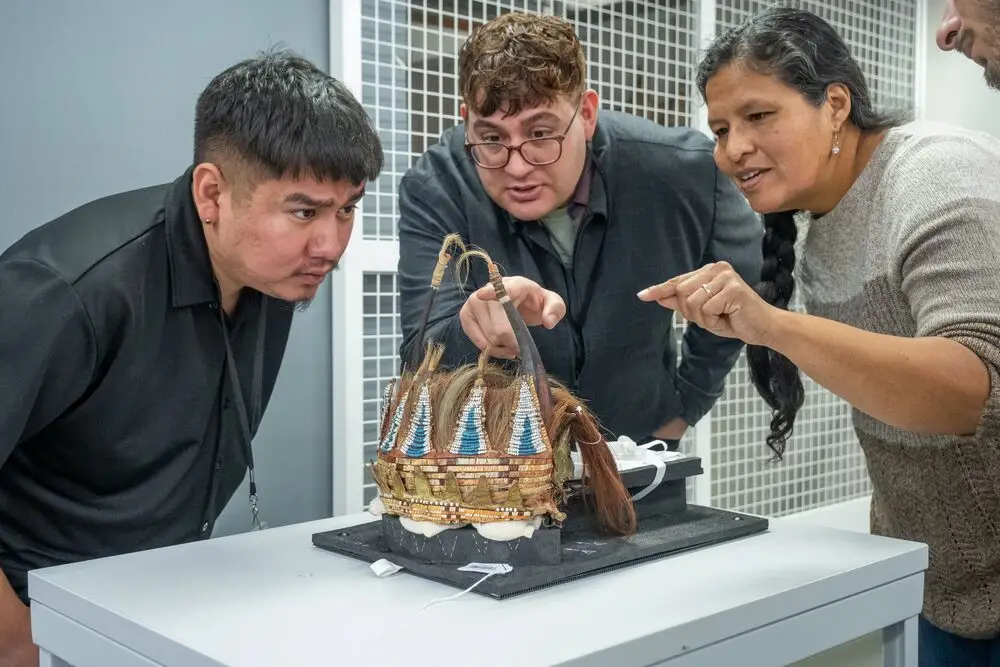
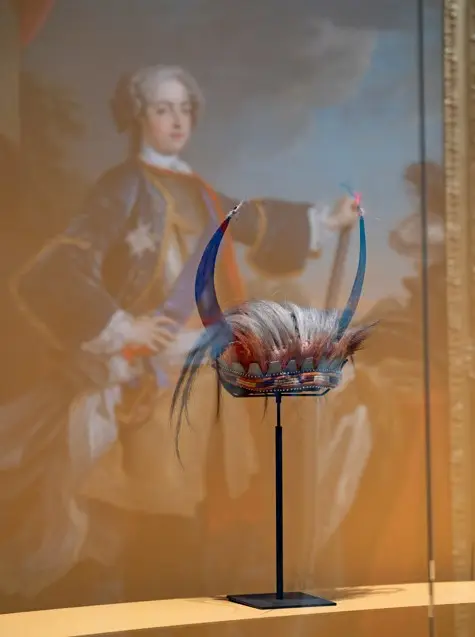
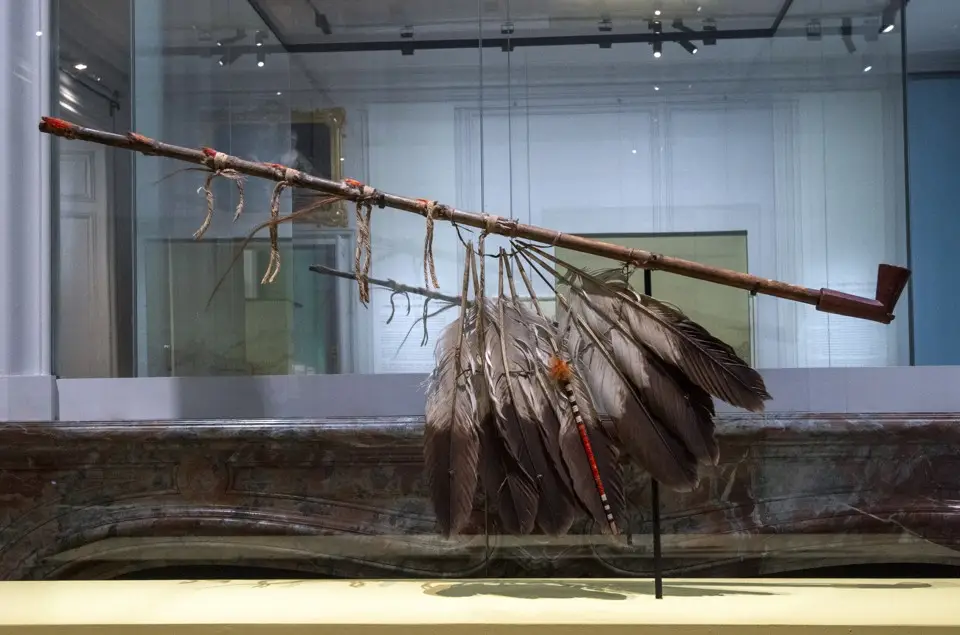
Others are captivated by rare cultural artifacts, including a striking bison-hide robe that has become one of the exhibition’s standout objects on display. Visitors are also drawn to ceremonial objects such as calumets – among the oldest preserved examples in the world – which help bring Indigenous diplomatic traditions to life.
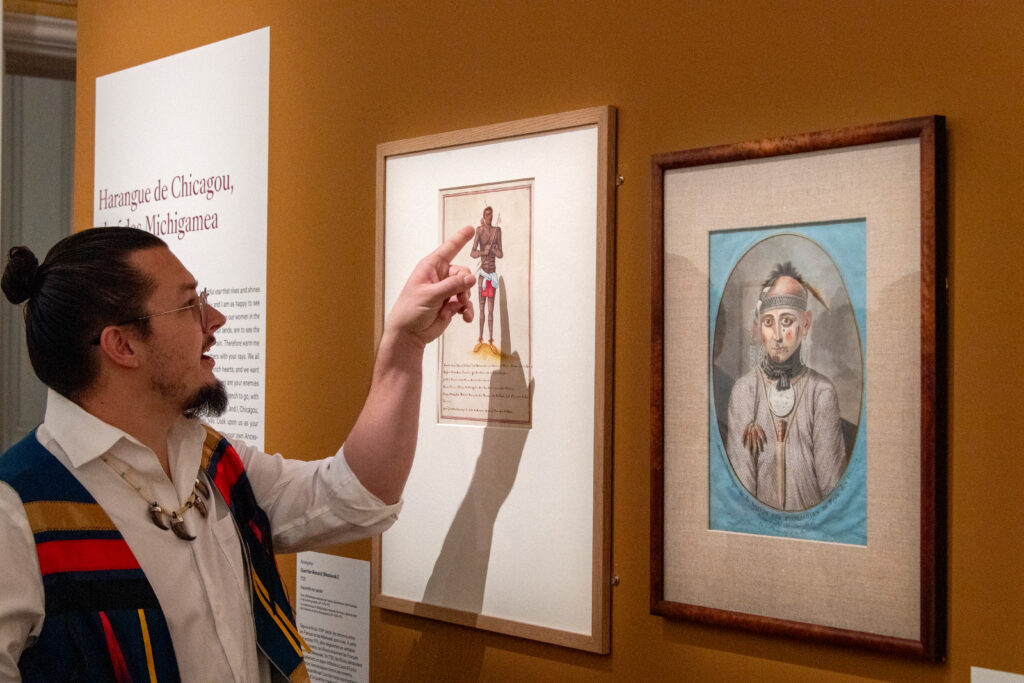
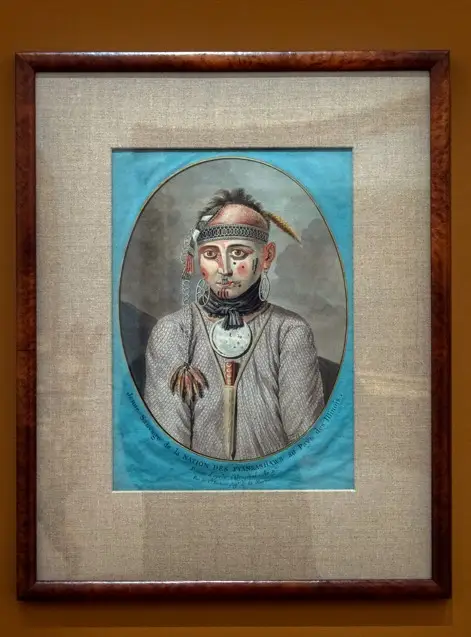
Portraiture has also become an unexpected point of connection. While visitors are naturally drawn to portraits of King Louis XV, many are equally intrigued by rare depictions of Native leaders, including the portrait of a Meskwaki warrior. These works help challenge and work to undo long-held stereotypes.
“Visitors often arrive with a very 19th-century, stereotyped idea of what Native peoples looked like,” Paz explains. “They leave with a very different understanding.”
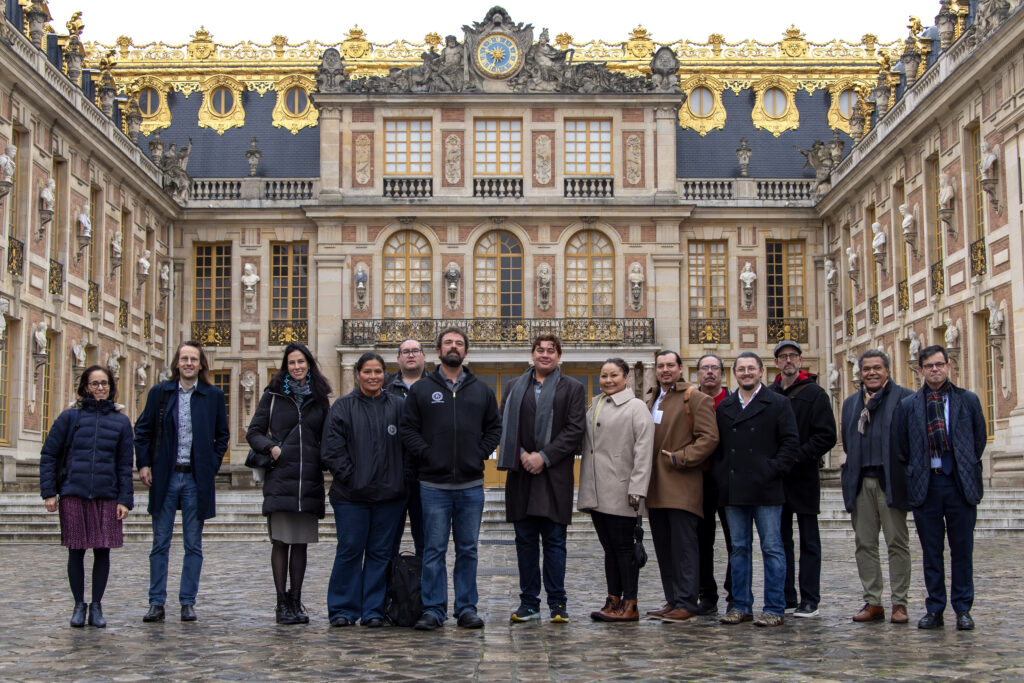
“My wish was to create a sense of unity among all these different Native American partners for the opening. They arrived a week earlier, and we held a symposium during which many of them met for the first time. It became an important moment of exchange, as they reflected on this common history, fostering a strong sense of collective unity.”
Paz explained that it was made even more symbolic in the timing for the 300th year anniversary. “The opening was very strong and there was a lot of emotion,” she said.
Colleen agreed, “It was certainly one of the most moving gatherings I’ve ever witnessed in a museum.”
Youth engagement in the exhibition has been a key priority for both partner institutions; Versailles has organized a cinema club for young audiences and families, featuring contemporary films made by Native community-produced films that tell the stories of Indigenous life and cultural practices. School groups have enjoyed visits, and the very popular podcast series on the exhibition, produced by Versailles’ digital communications teams, has reached hundreds of thousands around the world. Together, these initiatives have helped share the exhibition’s research, narratives, and messages more broadly, ensuring its findings remain accessible as a lasting educational resource.
Colleen reflected her own impressions of the exhibition, sharing that some of Versailles’ core audiences, who are ordinarily focused on the Ancien Régime, found an unexpected point of entry through the depictions of 18th century dance and performance – from a work by Pierre Alexandre Wille depicting one of the performances held in their honor, “Interior View of the Hôtel de Bourgogne, 1767”, or the score from the opera-ballet Les Indes Galantes.
“They know these works so well, but seeing them in this new context – the depictions of the dance and the performance alongside the material culture of Native communities that inspired the performing artworks’ production – was a much richer experience and elevates our appreciation of this moment in history, as well as the various influences working on creative production at the time.”
Visitors will rarely encounter such an exceptional selection of North American artefacts - many of them of deep cultural significance to the exhibition’s Native partners - presented in a setting as symbolic as the Château de Versailles.
Paz Núñez-Regueiro
Moments like these reflect the exhibition’s broader success: bringing together two vastly different, yet once closely interrelated and mutually dependent, cultures through new research, deep historical understanding, and attenuation to the involvement and co-curation of present-day Indigenous partners. Held on the 300th anniversary of the chief’s visit to Versailles, it truly brought the history forward to the present day, celebrating three centuries, and hopefully more, of cultural exchange.
Behind the scenes, the project required collaboration across numerous French institutions, including national archives, libraries, and museums that hold collections dispersed after the French Revolution. The Château de Versailles became a natural partner in helping tell this story and the exhibition will remain part of the important record of exhibitions presented at the Palace, Museum, and National Estate of Versailles.
Ultimately, the exhibition challenges assumptions about what belongs in spaces like Versailles – and proves that museums can reshape how history is understood.
Sometimes, the most powerful exhibitions are the ones visitors never expect to find.
Scott Trowbridge
Foundation Source
55 Walls Drive, 3rd floor
Fairfield, CT 06824
Phone: 800-839-1754
Direct: 203-319-3785