
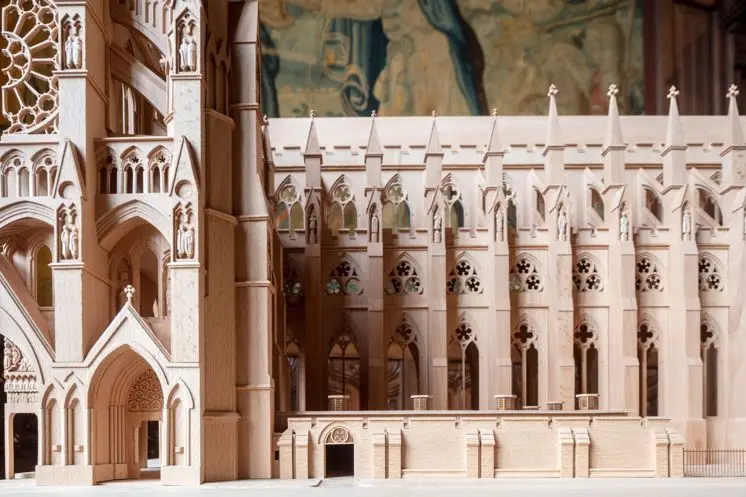
Westminster Abbey in London is one of the most recognisable Gothic churches in the United Kingdom. An architectural masterpiece of the 13th to 16th centuries, it presents a unique pageant of British history.
It dates back to the 1040s when King Edward (later St Edward the Confessor) established his Royal Palace by the banks of the River Thames. Later, in the middle of the 13th century King Henry III decided to rebuild it in the new Gothic style of architecture.
Since 1066, the Abbey has hosted every British monarch’s coronation, and is the final resting place for kings, queens, poets, musicians, scientists and politicians alike.
It contains over 600 monuments, and wall tablets – cited by the Abbey as the “most important collection of monumental sculpture anywhere in the country”. Because of this historical significance, in 1987 it became a UNESCO World Heritage Site, welcoming over one million visitors per year.
Now, in 2026, a new building, to be named The King Charles III Sacristy, will be opened to house a state-of-the-art welcome, security and visitor services facilities. This will allow the Abbey itself to be made more accessible, and reimagined. It will also free up more than 10% of its current floorspace in a sustainable manner, without significant interventions or extensions.
The Sacristy will be built on the original footprint of Henry III’s medieval Great Sacristy – where monks kept vestments, altar linens and other artefacts needed for their daily worship, providing additional significance to the need for sensitive restoration.
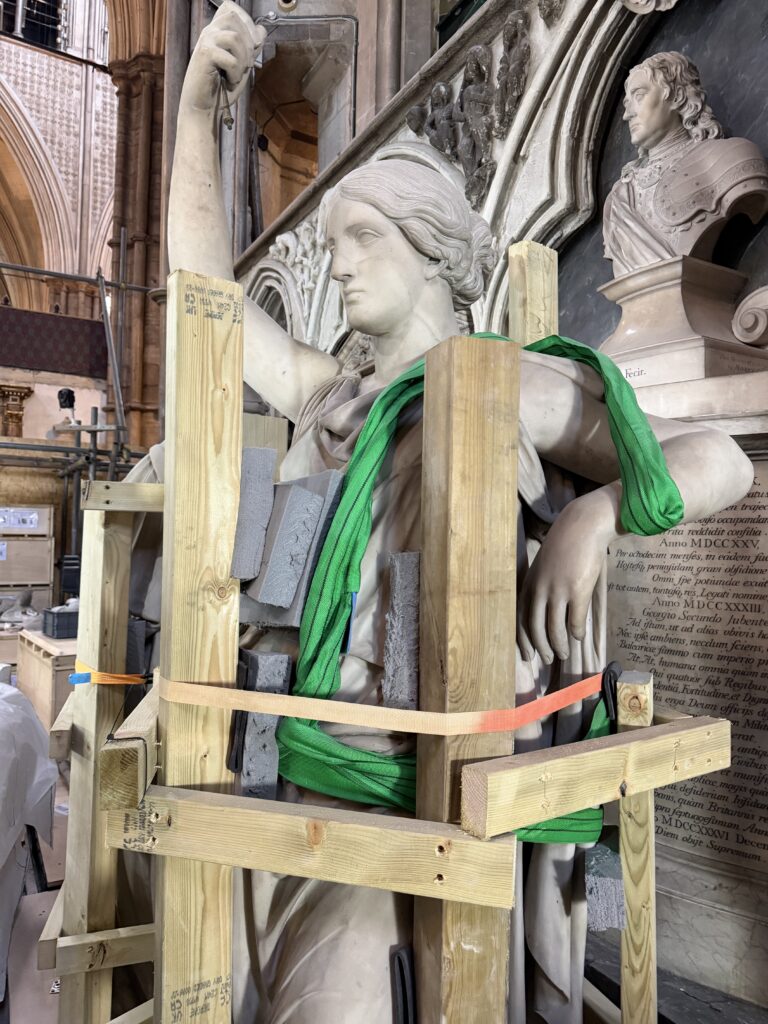
CORA Foundation has supported the project and contributed to the ongoing restoration and renovation of the space through a modest grant, and peer-to-peer convening activities.
CORA has a sincere appreciation for international collaboration and recognises Westminster Abbey’s efforts as a UNESCO World Heritage Site, its interfaith and leadership initiatives in the local community as well as on the global stage, its many cultural partnerships, and the commitment of HM King Charles III to sustainability and cultural heritage preservation, values this project champions.
CORA views this initiative as a vital step in preserving heritage, utilising intangible heritage skills and craft to produce an impactful architectural scheme, and continuing international friendship between communities of all backgrounds, faiths, and cultures.
This ambitious renovation also provides an invaluable platform for knowledge exchange amongst experts dedicated to the art of conservation. The project has undergone comprehensive master planning, which involves the strategic reopening of underutilised or previously inaccessible areas of the Abbey.
CORA Foundation commends the Abbey for focusing on enhancing accessibility and modernizing its offerings with an eye to long-term changes in audience behavior and the need for sustainable, low impact interventions in the built environment of cultural spaces. By creating new visitor routes that mitigate the footprint of growing audience numbers, the Abbey will better safeguard the World Heritage Site, engage the next generation of visitors, and inspire engagement with history for generations to come.
Scott Trowbridge
Foundation Source
55 Walls Drive, 3rd floor
Fairfield, CT 06824
Phone: 800-839-1754
Direct: 203-319-3785